


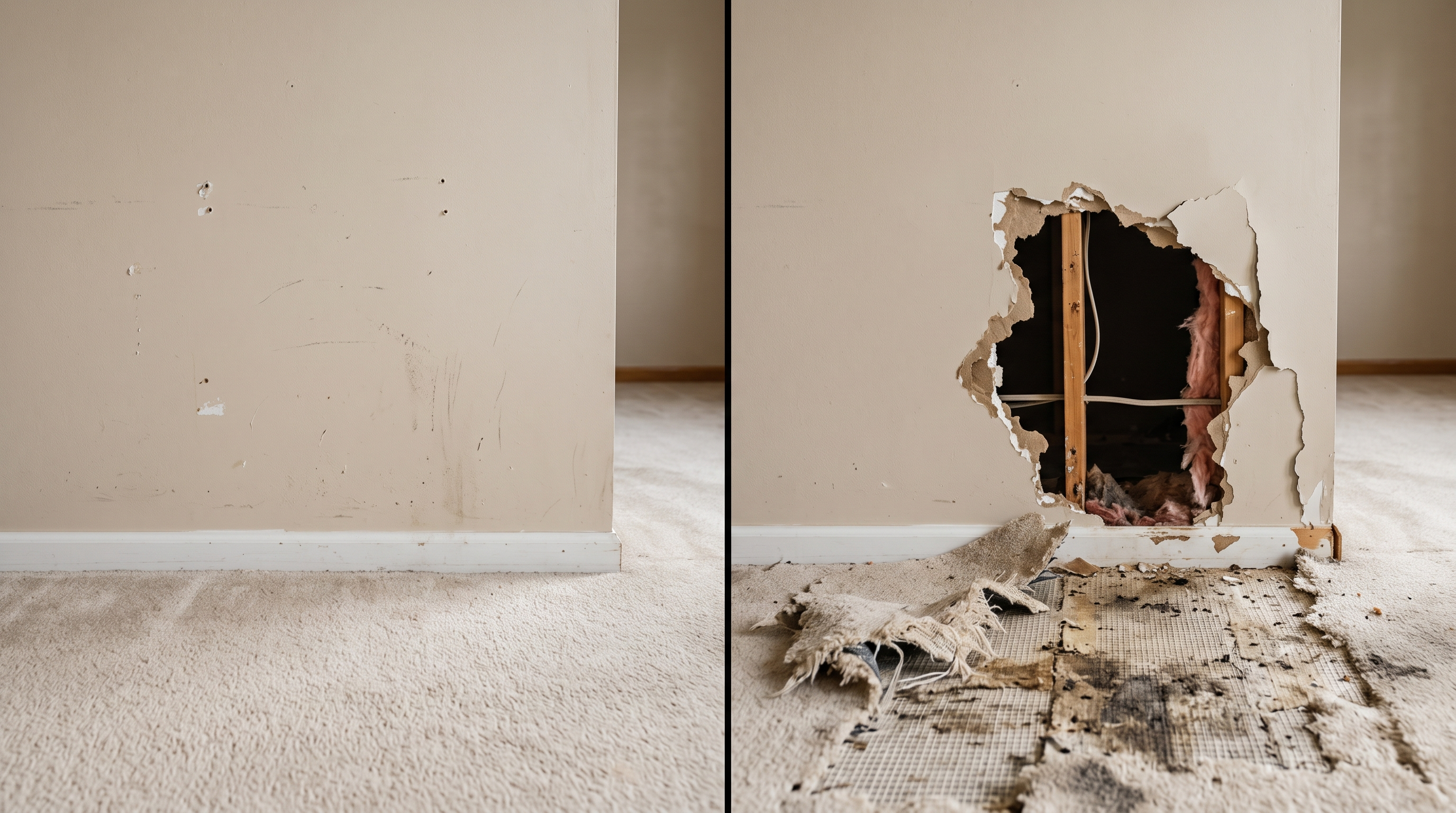
Normal wear and tear is the ordinary deterioration from everyday living and can't be charged to a tenant, while damage from negligence or misuse can be deducted from the deposit. Northern Virginia landlords stay on the right side of the line by documenting move-in and move-out condition, depreciating for age, and itemizing every deduction fairly.
Almost every move-out argument comes down to one blurry line: is that normal wear and tear, or is it damage the tenant should pay for? Get it wrong in either direction and it costs you—either you eat a repair you could have charged for, or you make an improper deduction and end up in a dispute you lose.
Here's how to think about it clearly.
The Basic Rule
Normal wear and tear is the ordinary deterioration that happens when someone simply lives in a home. You cannot charge for it—it's the cost of doing business as a landlord.
Damage is harm beyond ordinary use, whether from negligence, accident, or abuse. That, you can deduct for.
The test is roughly: would this have happened just from a reasonable person living there normally? If yes, it's wear and tear. If it took carelessness or misuse, it's damage.
Real-World Examples
Wear and tear (you eat it):
- Faded paint and small nail holes from hanging pictures
- Lightly worn carpet in walkways
- Minor scuffs on walls and floors
- Loose hinges or worn caulk
Damage (you can charge):
- Large holes in walls, or dozens of anchor holes
- Carpet with burns, pet stains, or tears
- Broken tiles, cracked countertops, missing fixtures
- Filth requiring far more than standard cleaning
The Gray Areas That Cause Fights
Carpet is the classic one. A path worn into five-year-old carpet is wear and tear. A wine stain or a pet-ruined section is damage—but you have to account for the carpet's age and remaining life, not charge for brand-new replacement. The same logic applies to paint: you can't bill a departing tenant for a full repaint the property needed anyway.
How to Protect Yourself
Document the before and after. Your move-in condition report and photos are what turn "I think it was like that" into proof.
Deduct fairly and itemize. A reasonable, well-documented deduction holds up. An inflated one invites a challenge—and in Virginia, sloppy deposit handling can cost you the whole deposit.
Depreciate, don't gouge. Charge for the value lost, not for an upgrade at the tenant's expense.
The Bottom Line
Fair, documented, depreciated. Do those three things and your deductions will hold up—and you'll avoid the disputes that eat your time and goodwill.
We handle move-out assessments for owners every week, and we know where the line is. Want our move-out checklist? Send us a message.
Frequently Asked Questions
What is the difference between wear and tear and damage?
Wear and tear is ordinary deterioration from normal living—faded paint, minor scuffs, lightly worn carpet—and can't be charged to a tenant. Damage results from negligence, accident, or misuse, such as large holes, burns, or pet stains, and can be deducted.
Can I charge a tenant for new carpet at move-out?
Only for the depreciated value, not a full replacement. You must account for the carpet's age and remaining useful life, so a stain on older carpet can't be billed as if it were brand new.
How do I protect myself in a deposit dispute in Virginia?
Document move-in and move-out condition with a report and photos, itemize every deduction, and depreciate for age. In Virginia, careless deposit handling can cost you the entire deposit, so fair and documented is essential.