

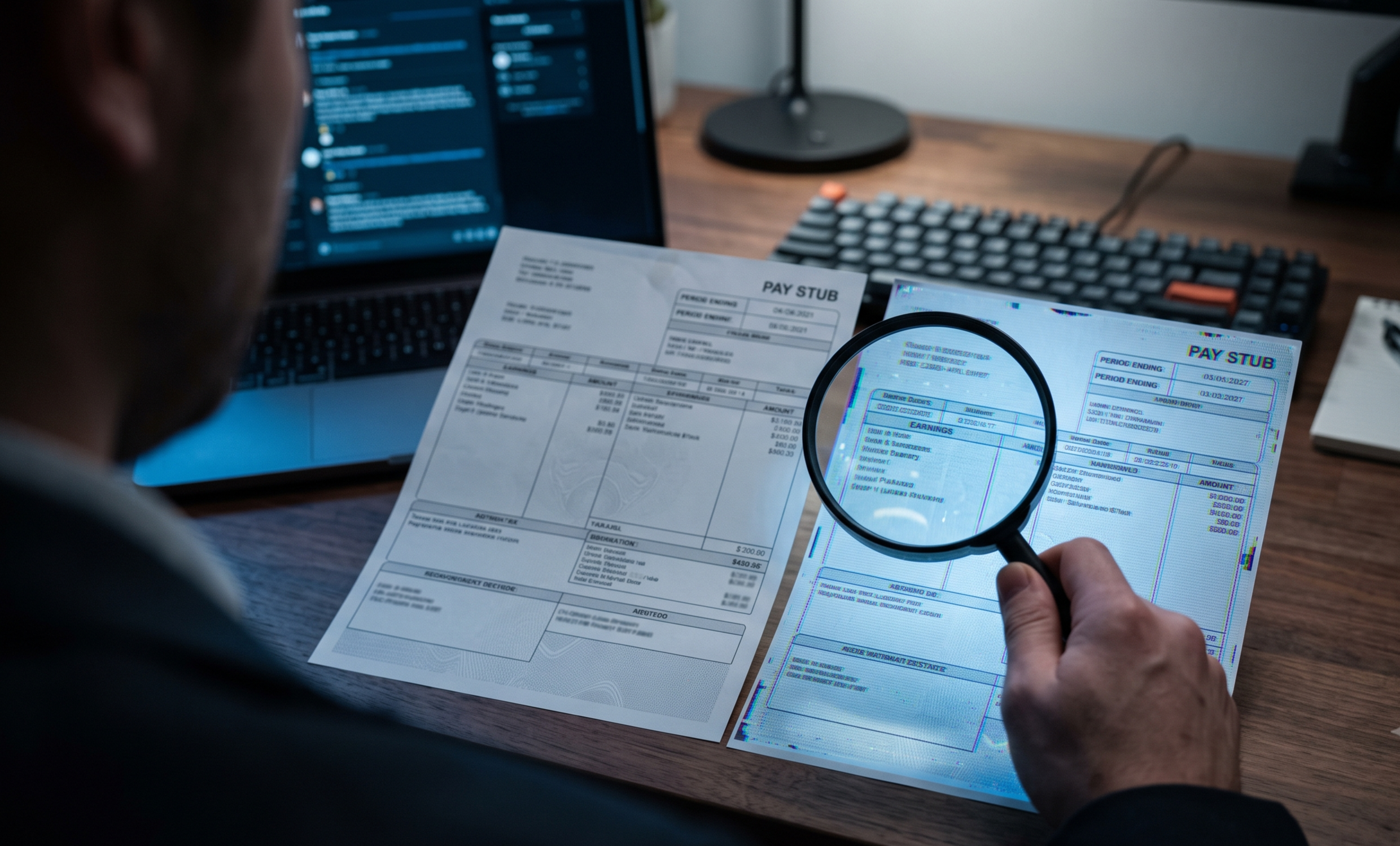
AI-generated pay stubs and fake bank statements now appear in a large share of rental applications. Northern Virginia landlords can protect themselves by verifying income directly with the employer, cross-checking bank statements, watching for pay that looks too perfect, using screening that flags document manipulation, and never rushing an approval.
Screening a tenant used to mean checking that the income was real. Now it means checking that the documents are real—and that's a much harder problem than it was even a year ago.
Application fraud is up roughly 40% year-over-year. One screening company found that more than 6% of the applications it reviewed contained manipulated documents, and some industry surveys now put fraudulent details in nearly one out of every three applications.
The reason is simple: anyone with an internet connection can generate a pay stub, a bank statement, or an employment letter that looks completely legitimate.
Why This Is So Dangerous
A fake pay stub isn't a paperwork problem. It's the front door to every landlord nightmare that follows—missed rent, a tenant who won't leave, and an eviction that, once you add up legal fees, lost rent, and damage, can top $30,000.
And the applicants who fake documents are, by definition, the ones most likely to stop paying. Screening exists specifically to filter them out. If your screening can be beaten by a $6 online template, it isn't screening anymore.
How to Catch It
Verify income at the source, not on the document. Call the employer directly by using a number you looked up, not the one on the letter. Ask HR to confirm employment and income.
Ask for bank statements and cross-check them. Real statements have consistent formatting, running balances that actually add up, and deposits that match the stated pay. Fakes often have round numbers and math that doesn't reconcile.
Watch for pay that's too perfect. Identical net amounts to the penny every period, no tax quirks, no benefit deductions—real paychecks are messier than that.
Use a screening service that flags document manipulation. The better ones now detect AI-generated and edited files automatically.
Slow down. Fraud thrives on urgency. The pressure to fill a vacancy fast is exactly what pushes landlords to skip the verification call. Two extra days beats two lost months.
The Bottom Line
The tenant who's easiest to approve is sometimes the one working hardest to get approved. In a market where the tools to fake it are this good, verification isn't paranoia—it's the job.
This is where working with a manager earns its keep. We verify income directly, we know what a doctored document looks like, and we've seen the tricks. If you're self-managing and want the verification steps we run on every applicant, send us a message.
Want to learn more about what's going on? Check out this video.